The back story
Convicts, canopies and the Cape Grand Prix: Cape Town and the motor car, the back story
A cliff road cut by convicts, a Grand Prix won on a spin, and a car museum moved from the Highveld.

Photo Credit
Image courtesy of © Diego Delso · CC BY-SA 4.0 via Wikimedia CommonsCape Town’s love affair with the car runs along a cliff, around a racing circuit and into a wine valley. Why does a city better known for mountains have such a motoring story? Here is how Chapman’s Peak Drive was cut and saved, how Killarney hosted the Cape Grand Prix, and how a museum moved from the old Transvaal to Franschhoek, from the road’s, the club’s and the museum’s own histories, checked in November 2026.
A road cut by convicts
The name is older than the road by three centuries. In 1607 an English ship was becalmed in what is now Hout Bay, and its pilot, John Chapman, rowed ashore for provisions; the bay was charted as Chapman’s Chaunce. The road was named after a man who rowed ashore for supplies, which is a modest start for one of the great drives.
Surveyors began work on the cliffs in 1914. Construction started from the Hout Bay end in 1915, with convict labour, and from the Noordhoek end in 1916; the first stretch, to the Lookout, opened in 1919. The Hout Bay–Noordhoek road opened to traffic on 6 May 1922, after seven years and £20,000.
Rockfalls and a toll
The mountain had the last word for decades. After fatal rockfalls the road was closed indefinitely in January 2000, and it reopened as a toll road on 20 December 2003, rebuilt with catch fences, a 155 m half tunnel at the base of Chapman’s Peak and concrete canopies where the sandstone cliffs rise more than 400 m above the tarmac. It closed again for upgrades in June 2008 and reopened on 9 October 2009.
It still closes for weather and maintenance, so check the status board before you set off; on the morning of 18 November 2026 it read closed. On a clear day it is the drive to save the roof down for.
Moss, Clark and a spin
Motor racing found its home north of the city. The Metropolitan Motorcycle and Car Club, the Mets, was formed in 1928, and Killarney first saw racing in 1947 on a disused stretch of road. In 1959–60 the club borrowed to build a circuit to Formula One international standard, designed by Edgar Hoal.
The club’s own history records the original circuit, by a tape-measure legend involving one Billy Kay, at 5,562 ft 9 in: motor racing has always liked its numbers precise, even when they are legends.
The road was named after a man who rowed ashore for supplies, which is a modest start for one of the great drives.
The investment paid off at once in spectacle, if not in money. The first Cape Grand Prix, on 17 December 1960, went to Stirling Moss and Jo Bonnier, first and second in Porsches, with Wolfgang von Trips third in a Lotus. At the second, on 2 January 1962, Jim Clark spun his Lotus and handed victory to his team-mate Trevor Taylor. Generosity on a racing circuit is rarely intentional.
The Western Province Motor Club still runs Killarney Raceway, with track hire by the half or full day, public track schools and a busy calendar of club racing, drag days and rallycross.
The collection that moved
The car collection took the long way round. Dr Anton Rupert opened the Heidelberg Museum in the old Transvaal in 1974; it closed in 2003, and in 2004 his son Johann Rupert bought the collection and moved it to the L’Ormarins estate. The Franschhoek Motor Museum opened to the public on 7 May 2007. More than 220 vehicles rotate through four halls, with over 80 on show, from an 1898 Beeston motor tricycle onwards.
Among the cars that have shown there are a 1930 Bugatti Type 46, a 1936 Auburn 852 Speedster and a 1974 Ford Tyrrell 007/1, a Formula One car at home on a wine estate. The museum is open daily from 10am, closes on Good Friday and Christmas Day, and is cashless: book online, and adult tickets cost R90.
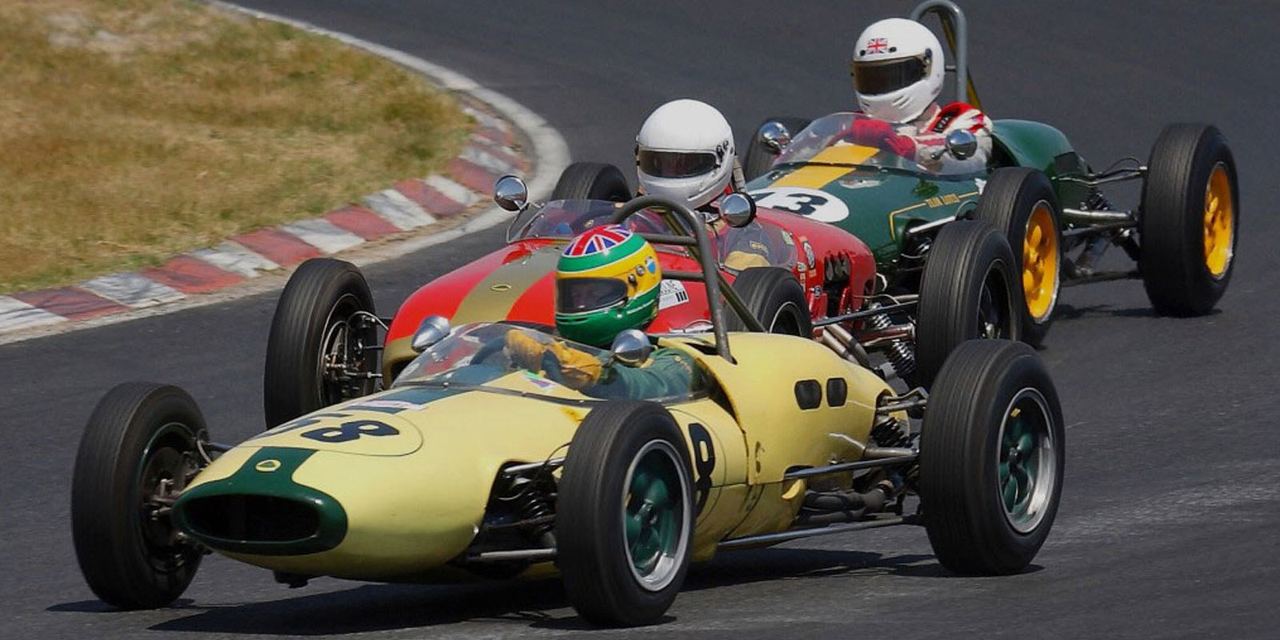
Photo Credit
Image courtesy of © Killarney RacewayFor something newer, Ferrari’s own dealer locator lists the official Cape Town showroom. South Africa drives on the left, with limits of 60 km/h in towns, 100 km/h on secondary roads and 120 km/h on national highways. Our advice: take Chapman’s Peak in the morning from Hout Bay, with the sea on your side of the car, and keep Franschhoek for a weekday, when the halls are quiet.
Why it's on our list
- A road cut by convicts
- Rockfalls and a toll
- Moss, Clark and a spin
- The collection that moved
Location
The map comes from Google Maps, which sets its own cookies once it loads.
More in depth
 The back storyCape Town by bus, train and seaBuses, trains, the Blue Train and the boats to Robben Island.
 Coming soonComing soon: the tech the makers have promisedOfficially announced tech, from Gemini glasses to Meta's VR specs, plus the newest arrivals.
 CompareAirPods Pro 3 vs the rest: noise-cancelling earbuds comparedAirPods Pro 3 against AirPods 5, Sony WF-1000XM6 and Bose QuietComfort Ultra Earbuds.