The back story
Biscuits, diamonds and a prince’s breakwater: how Cape Town shops, the back story
A storm-proof harbour, a biscuit factory, a fish factory and a diamond cutter: Cape Town’s shops.

Photo Credit
Image courtesy of © Mike Peel · CC BY-SA 4.0 via Wikimedia CommonsCape Town’s best shopping lives in buildings that were meant for something else: a Victorian harbour, a biscuit factory, a fish factory in a working port. Why does the city keep turning industry into retail? Here is the story, from the V&A Waterfront’s first stone in 1860 to the Saturday markets and the diamond workshops, checked against the centres’, markets’ and makers’ own pages in November 2026.
A harbour built for storms
The city’s great shopping address began with a shipwreck problem. Storms in 1858 wrecked more than 30 vessels in Table Bay, and Lloyd’s of London refused to cover ships spending the winter there. On 17 September 1860 Prince Alfred, Queen Victoria’s second son and then a midshipman, laid the first stone of a breakwater meant to make the harbour safe all year round.
The Alfred Basin came first; as gold and diamonds brought more shipping, the Victoria Basin followed, the two built between 1860 and 1920. The red clock tower has stood at the entrance to the Alfred Basin since 1882. The V&A Waterfront, named after the queen and her son, was established in 1988 to bring the old docks back to life, and Victoria Wharf, its shopping centre, now fills a galleria by the water.
Insurers declined Table Bay in winter; a century and a half later, the shoppers are queueing for it. The harbour still works, too, so the boats beside the shop windows are not props.
Factories into markets
Woodstock tells the same story with flour. The Old Biscuit Mill was the factory of the Pyott’s biscuit company, which John Pyott opened in the early 1900s and which baked there until 1946. Today design shops, studios and restaurants fill the brick halls, and the Neighbourgoods Market takes over the yard; the Mill’s visitor page gives market hours of 9am to 3pm on Saturdays and 10am to 4pm on Sundays.
Hout Bay went one better and kept the fish factory. The Bay Harbour Market trades in what it calls an authentic fish factory in a working harbour, on Harbour Road, with crafts, fashion, food and live music. It opens from 9.30am to 9pm on Fridays and 9.30am to 5pm at weekends and on public holidays, closes on Christmas Day, and admits no pets except certified guide dogs.
Diamonds from a craft stall
Cape Town’s jewellers add their own industry. Yair Shimansky began in South Africa in 1991, after two years in Japan studying how light behaves in diamonds; he sold at a craft market for a year, opened his first boutique in 1994, and in 1999 set up his own diamond polishing workshop and the Cape Town Diamond Museum. The firm patented its My Girl cut in 2003, and its museum now sits in the Clock Tower at the V&A.
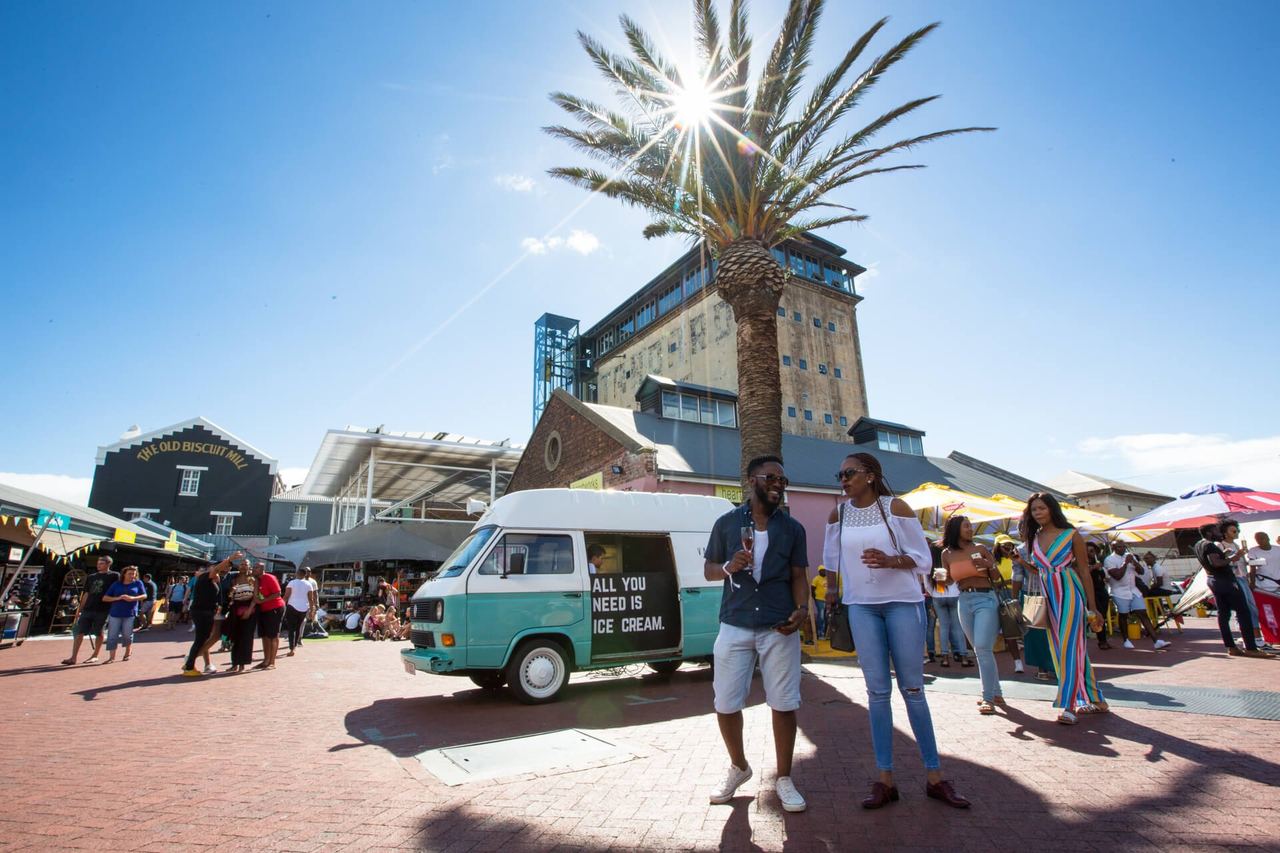
Photo Credit
Image courtesy of © The Old Biscuit MillIt is a rare retail story that runs from a market stall to a museum rather than the other way round. Charles Greig, the South African fine jeweller, keeps a Cape Town store for those who prefer their diamonds without the tour.
Insurers declined Table Bay in winter; a century and a half later, the shoppers are queueing for it.
In Newlands, the industry is older and the scale smaller. The farm buildings of the Montebello Design Centre were the birthplace of Ohlssons Brewery and of Continental China; today the not-for-profit centre, founded on a bequest from Cecil Michaelis, holds twenty-five arts and craft studios and workshops, a historic greenhouse, a nursery and a restaurant. Beer, then china, now ceramics: the buildings have simply kept making things.
The malls and the question
Beyond the old buildings, the city has its malls. Cavendish Square in Claremont counts more than 190 stores, eight Nu Metro cinema screens and five forex banks, open from 9am to 7pm Monday to Saturday and 9am to 5pm on Sundays; Canal Walk sprawls at Century City, and Cape Quarter in De Waterkant keeps fashion, décor and gifts in a lifestyle village.
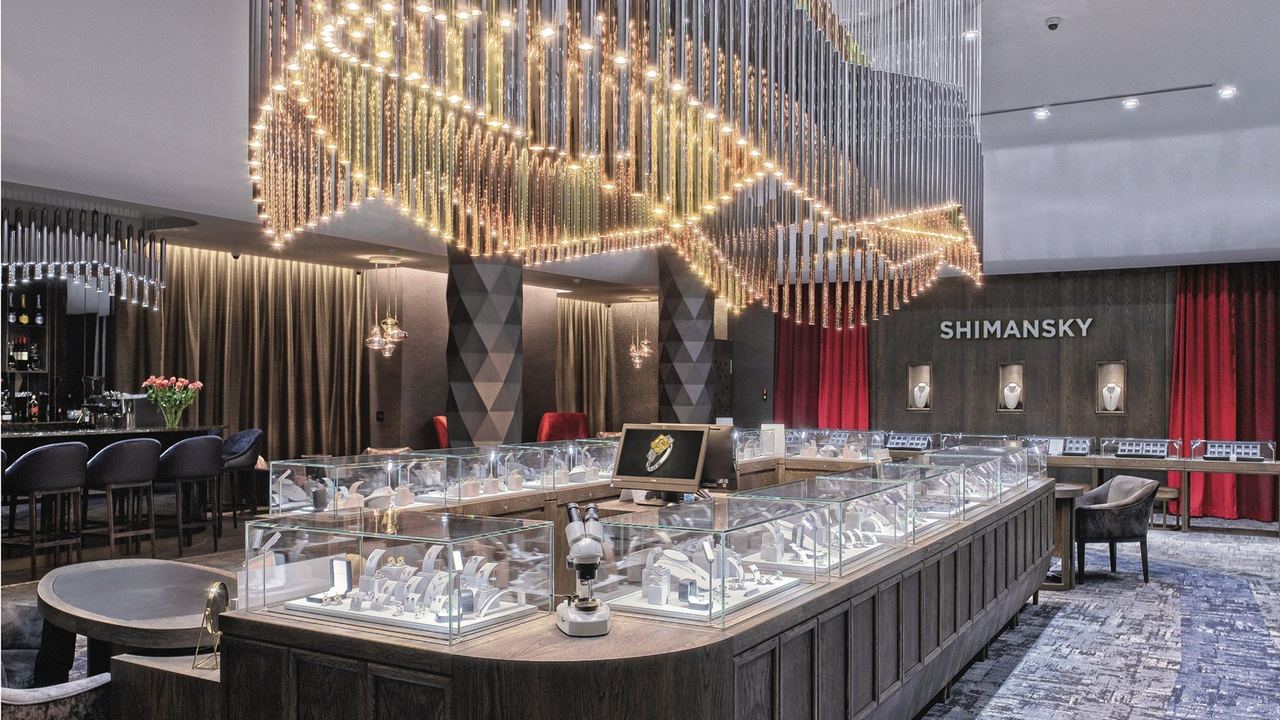
Photo Credit
Image courtesy of © ShimanskySo why does Cape Town keep shopping in old industrial buildings? Partly because it has them: a harbour that never stopped working, factories that outlived their products. Partly because the city’s makers want to be seen making. Our advice: do the V&A on a weekday morning, Woodstock on a Saturday, Hout Bay on a Friday evening, and leave the diamonds until you have seen how they are cut.
Why it's on our list
- A harbour built for storms
- Factories into markets
- Diamonds from a craft stall
- The malls and the question
Location
The map comes from Google Maps, which sets its own cookies once it loads.
More in depth
 The back storyBuying in Cape Town: the Atlantic, the vines and the transferWhere people buy in Cape Town, and how a sale works.
 Partly openStrand seawall and promenade, Phase 2A new seawall and promenade at Strand: Mosterd’s Bay is open again, the rest due in February 2027.
 The back storyConvicts, canopies and the Cape Grand Prix: Cape Town and the motor car, the back storyA cliff road cut by convicts, a Grand Prix won on a spin, and a car museum moved from the Highveld.